The course library
Thirteen specialist courses.
Written for health and care, not a generic course with "care" on the cover. Each one works on desktop, tablet and mobile, and comes with a certificate of completion, valid for 12 months.
Person-centred care
Customer Service
Great care isn't just what you do — it's how you make people feel.
Deliver outstanding service in every interaction. Build the communication, empathy and professionalism that turn routine care into a positive experience for the people you support.
What learners will be able to do
- Communicate clearly, politely and professionally in every interaction
- Use active listening to understand and respond to individual needs
- Manage expectations and handle difficult conversations with empathy
- Respond to complaints and feedback constructively and in line with policy
- Present a professional image that reflects the values of the service
- Recognise how communication shapes the experience and outcomes of care
Dementia Awareness
Good dementia care starts with the person — not the diagnosis.
Deliver person-centred dementia care. Understand the condition, how it affects the person, and how to support individuals to live well with dementia.
What learners will be able to do
- Describe the main types of dementia and how they differ
- Recognise how dementia affects communication, behaviour and wellbeing
- Deliver person-centred care that values the individual's life story
- Communicate effectively and compassionately with people living with dementia
- Support independence and meaningful activity
- Respond to distress in a way that reduces the need for medication
Equality, Diversity and Inclusion
Person-centred care starts with understanding the person — not the paperwork.
Deliver care that respects every individual. This course builds the awareness and confidence to treat people fairly, challenge discrimination, and provide truly person-centred care.
What learners will be able to do
- Explain the principles of equality, diversity and inclusion in a care setting
- Identify the protected characteristics under the Equality Act 2010
- Recognise direct and indirect discrimination, stereotyping and bias
- Deliver person-centred care that respects individual identity and preferences
- Communicate inclusively and respond to diverse cultural, religious and personal needs
- Challenge discrimination appropriately and know how to report concerns
Fire Safety Awareness
The best training is the kind you can act on without thinking.
Prevent fires, raise the alarm and evacuate safely. Learn the practical fire safety skills every care worker needs to protect the people they support.
What learners will be able to do
- Explain how fires start and spread in a care setting
- Apply the principles of fire prevention in day-to-day work
- Raise the alarm and respond correctly when fire is discovered
- Use basic firefighting equipment safely and know its limits
- Support a safe evacuation, including assisting individuals with reduced mobility
- Follow the home's fire evacuation plan and PEEPs
Food Hygiene
Good practice in the kitchen is a form of care.
Keep food safe for the people you support. Learn the hazards, temperature controls, allergen management and personal hygiene standards that prevent foodborne illness.
What learners will be able to do
- Identify the main food safety hazards (biological, chemical, physical, allergens)
- Prevent cross-contamination in storage, preparation and service
- Apply correct temperature control and chilled/frozen storage practices
- Manage allergens and communicate them to the people you support
- Maintain personal hygiene standards in a food-handling role
- Apply HACCP principles and meet legal responsibilities under food safety law
Health and Safety Awareness
Safety isn't a separate task from care — it's part of caring well.
Work safely, every shift. Understand the hazards, risk assessments and legal duties that keep care workplaces safe for the people you support and your team.
What learners will be able to do
- Understand key health and safety legislation, including the HSWA 1974, COSHH and RIDDOR
- Identify common workplace hazards in a care setting
- Contribute to and follow risk assessments
- Follow safe systems of work, including fire, electrical and hazardous-substance safety
- Report incidents, accidents and near-misses correctly (RIDDOR)
- Promote a positive health and safety culture
Infection Prevention and Control
In care, the ordinary habits are the safeguards.
Break the chain of infection. Learn the standard precautions, hand hygiene, PPE and safe practice that protect the people you support — and yourself.
What learners will be able to do
- Explain the chain of infection and how it is broken
- Perform effective hand hygiene in line with the WHO 5 moments
- Select, use, remove and dispose of PPE correctly
- Manage sharps and blood/body fluid spillages safely
- Recognise the signs of common healthcare-associated infections (e.g. MRSA, C. difficile)
- Apply local IPC policies and the Code of Practice in day-to-day care
Mental Capacity Act and DoLS
Protecting someone's rights and their wellbeing aren't in tension — they're the same thing, done properly.
Make lawful, person-centred decisions. Understand the Mental Capacity Act 2005, best-interests decisions, and the safeguards that protect people when liberty is restricted.
What learners will be able to do
- State the five principles of the Mental Capacity Act 2005
- Assess capacity using the two-stage test
- Make and record best-interests decisions in line with the Act
- Explain Advance Decisions, LPAs and the role of the IMCA
- Describe when a deprivation of liberty is lawful (DoLS / LPS)
- Apply the MCA to day-to-day care decisions and record appropriately
Moving and Handling Awareness
Protecting your back is protecting your career — and the people around you.
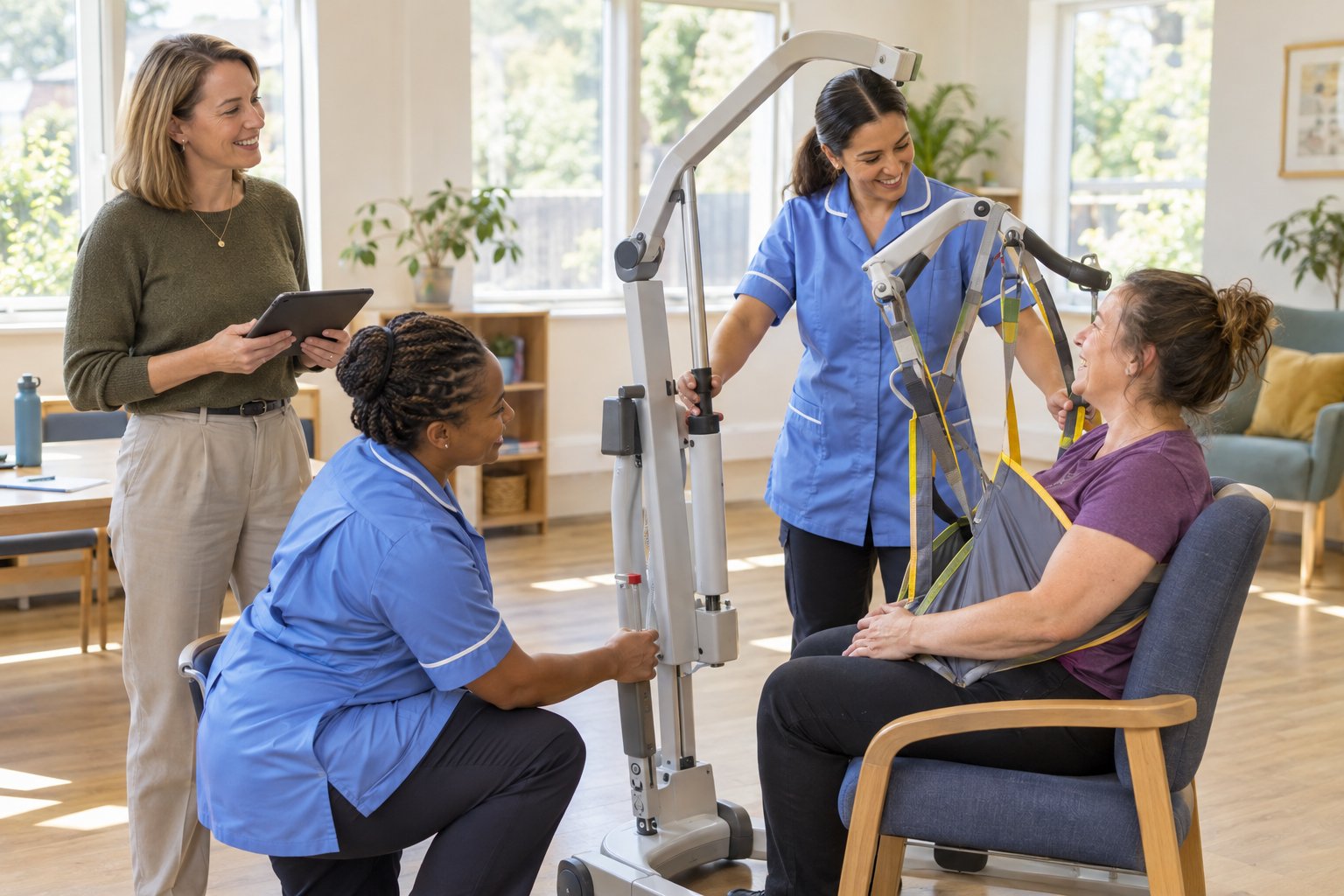
Move and handle safely — and protect your back. Learn the legislation, risk assessment (TILE) and techniques for moving objects without injury to yourself or others.
What learners will be able to do
- Explain the legal requirements under the Manual Handling Operations Regulations 1992
- Carry out a manual handling risk assessment using the TILE framework
- Apply safe moving and handling techniques for inanimate loads
- Select and use handling equipment and aids correctly
- Identify and reduce the risk of musculoskeletal injury to self and others
Nutrition and Hydration
Wellbeing starts with the basics — and food and fluid are basics too often missed.
Support wellbeing through good nutrition and hydration. Learn to spot the signs of poor intake, support safe eating and drinking, and act early to prevent malnutrition and dehydration.
What learners will be able to do
- Explain the importance of nutrition and hydration to health and wellbeing
- Identify signs and risk factors for malnutrition and dehydration
- Support individuals to eat and drink safely, including dysphagia precautions
- Use the MUST screening tool to identify malnutrition risk
- Accommodate cultural, religious and personal dietary preferences
- Monitor, record and report concerns about intake
Safe Handling and Administration of Medication
Medication safety comes from a process you follow every time — not from luck.
Handle and administer medication safely. Learn the rights, checks and record-keeping that prevent errors and keep the people you support safe.
What learners will be able to do
- Describe the legislation and guidance underpinning safe medication handling
- Store, secure and manage medication stock correctly
- Apply the "rights" of medication administration on every occasion
- Support individuals to self-administer where appropriate
- Record administration accurately and in a timely way
- Recognise and respond to medication errors and adverse reactions
Safeguarding Adults
Safeguarding is everyone's business — the person who notices is often the one right there.
Recognise, respond and report. Learn to identify abuse and neglect, understand your responsibilities under the Care Act 2014, and raise a safeguarding concern the right way.
What learners will be able to do
- Define adult safeguarding and describe the ten types of abuse
- Recognise the signs and indicators of abuse and neglect
- Explain your responsibilities under the Care Act 2014
- Raise a safeguarding concern correctly and without delay
- Follow correct reporting and recording procedures, including whistleblowing
- Support a person-led, outcome-focused approach to safeguarding
Team Leading
The quality of care rises and falls on leadership.
Lead a care team with confidence. Develop the skills to delegate, communicate, motivate and build a culture of safety, openness and learning.
What learners will be able to do
- Describe key leadership styles and when to apply them in a care setting
- Delegate and supervise work effectively and safely
- Communicate clearly and motivate a care team
- Manage conflict and support team performance
- Promote a culture of safety, openness and learning, including the duty of candour
- Support and develop team members through coaching and feedback
Already have courses you trust?
Bring your existing training records and connect your own learning platform, so every completion still counts in Feaniks HQ.
Talk to us about training →